Why HOA Reserve Studies Matter in California
Many HOA financial problems do not begin with a single large repair bill. They begin when a community delays planning for predictable costs such as roof replacement, exterior painting, pavement repairs, balconies, fencing, plumbing, pools, gates, elevators, or clubhouse improvements.
California’s Davis-Stirling Common Interest Development Act requires associations to plan for the repair and replacement of major common-area components. A key part of that planning is the reserve study. For HOA boards and homeowners, understanding the reserve-study timeline can help prevent surprise special assessments, deferred maintenance, and difficult budget decisions.
California Civil Code section 5550 requires an association to obtain a visual site inspection of the major components for which the association has reserve responsibility at least once every three years. The reserve study must also be reviewed annually and adjusted when appropriate.
The 3-Year Visual Inspection Requirement
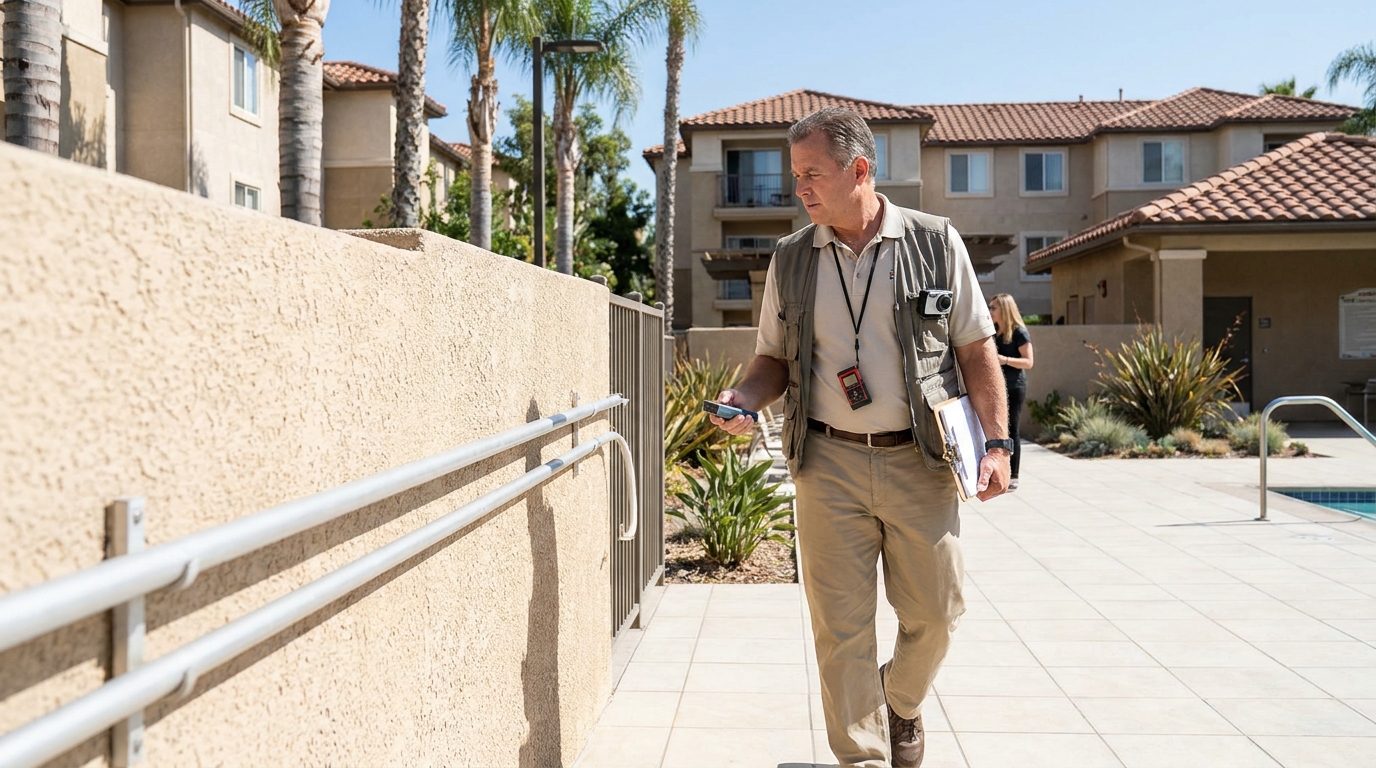
Under Civil Code section 5550, a reserve study must include a reasonably competent and diligent visual inspection of the accessible areas of the major components the HOA is obligated to repair, replace, restore, or maintain. That visual inspection must occur at least once every three years.
This does not mean an HOA can simply reuse an old report indefinitely. A prior reserve study can be updated in the years between site inspections, but the association still needs a new visual inspection on the required schedule.
For example, if an HOA completed a full reserve study with a site inspection in 2024, it generally should plan for another visual inspection no later than 2027. In the intervening years, the board should still review the reserve study annually and consider whether current construction costs, component conditions, project schedules, or reserve balances require changes.
What the Inspection Is Designed to Address
The reserve-study process is intended to help an HOA estimate the remaining useful life and anticipated replacement cost of major common-area components. Depending on the community, these may include:
- Roofs, gutters, and drainage systems
- Private streets, asphalt, sidewalks, and concrete
- Exterior paint, stucco, siding, and wood trim
- Community pools, spas, equipment, and fencing
- Gates, security systems, lighting, and irrigation
- Clubhouse, fitness center, or recreation-area components
- Elevators, boilers, plumbing infrastructure, or other shared building systems
A reserve study is not a substitute for an engineering report, contractor inspection, building inspection, or emergency maintenance evaluation. If the reserve analyst identifies a possible concern, or if the board observes deterioration, the association may need a qualified specialist to investigate further.
Annual Review Is Still Required
The three-year visual inspection rule is only one part of an HOA’s reserve obligation. Civil Code section 5550 also requires the board to review the reserve study annually and consider whether to adjust reserve funding or the timing of planned projects.
Annual review is especially important when conditions change. Construction prices, insurance-related rebuilding costs, labor availability, material costs, and interest income can all affect a reserve plan. A roof that appeared likely to last another eight years may need earlier work after storm damage. Likewise, a project may be postponed if a component remains in better-than-expected condition.
Boards should avoid treating the reserve study as a static document. It is a planning tool that should be revisited as the property and the market change.
Practical Questions for the Board to Ask Each Year
- Are any major repair or replacement projects scheduled within the next one to five years?
- Have contractor estimates or construction costs changed significantly?
- Has the association used reserve funds for an unplanned project?
- Are any common-area components showing signs of faster deterioration?
- Does the current reserve contribution align with the updated funding plan?
- Is the next visual site inspection already on the management calendar?
Reserve Disclosures in the Annual Budget Package
Reserve planning is also a homeowner communication issue. Civil Code section 5300 requires associations to distribute an annual budget report to members within the required timeframe. That report includes reserve funding disclosures, including a summary of the association’s reserves and information about whether reserve funding is projected to be adequate for future repair and replacement obligations.
For homeowners, these disclosures can provide useful context when reviewing annual dues increases. Higher assessments are not automatically a sign of poor management. In some communities, an increase may reflect a responsible effort to address years of underfunding or to prepare for known capital projects.
On the other hand, homeowners should pay attention when reserve balances are low, major projects are approaching, or the association repeatedly delays maintenance. Those circumstances can increase the possibility of future assessment increases or special assessments.
Tips for HOA Boards
- Calendar the deadline early. Do not wait until the third year to find a reserve professional and schedule a site visit.
- Keep project records organized. Invoices, warranties, maintenance logs, contractor proposals, and completed-project information can improve future reserve updates.
- Coordinate reserves with maintenance. Routine maintenance can extend component life, while deferred maintenance can shorten it.
- Review assumptions, not just totals. A reserve balance may appear healthy, but projected costs or useful-life assumptions may be outdated.
- Communicate clearly with owners. Explain major upcoming projects and the financial planning behind assessment decisions.
Tips for Homeowners and Buyers
Owners can review the association’s annual budget report and reserve disclosures to better understand the community’s financial planning. Buyers considering a home in an HOA may also want to review the available HOA documents carefully, including the budget, reserve information, assessment history, meeting minutes, and known capital projects.
A well-funded reserve account does not guarantee that an HOA will never need a special assessment. Unexpected damage and major changes in construction costs can occur. Still, consistent reserve planning can give a community more options and reduce the risk of urgent, last-minute funding decisions.
This post is general information, not legal advice. Readers should consult a California attorney for advice about their specific situation.
For support with HOA management, property management, real estate, or insurance needs, contact David and Company at 888-388-2864.